
Biblioteka Cyfrowa Uniwersytetu Jana Kochanowskiego udostępnia 13 895 obiektów cyfrowych
Obiekt
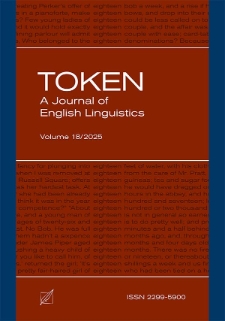
Tytuł: Ageist propaganda on social media : Disguising hate speech through mock politeness
Twórca:
Tytuł publikacji grupowej:
Współtwórca:
Newman, John G. Ed. ; Dossena, Marina. Ed. ; Samson, Christina. Guest Ed. ; Cecconi, Elisabetta. Guest Ed. ; Martini, Isabella. Guest. Ed.
Abstrakt:
This article intends to analyse how mock politeness strategies signal the expression of ageist propaganda in online news commentary. By resorting to a subset of the netlang hate speech corpus, composed of user-generated texts posted on the comment boards of the Daily Mail news website, namely in response to articles dealing with sensitive age-related issues, the article looks into the disguised ways in which ageism is voiced. More specifically, it examines four different types of politeness strategies – thanking, complimenting, agreeing, and apologising – and assesses whether their positive and negative face-enhancing function is genuine or, as the hypothesis goes, insincere, hence strategic and manipulative, playing a triggering role in the expression of prejudice. The findings confirm the occurrence of pragmatic mismatch, as anticipated in the literature on mock politeness, and reveal a two-phase process under which it is accomplished. The article thus hopes to shed light on a relatively neglected aspect of im/politeness studies, by describing devious realizations of politeness strategies through both formulaic and creative language. At the same time, it hopes to contribute to understanding the exploitation of polite speech acts for propagandistic, potentially harmful, ideological effects regarding an equally neglected social group in hate speech research.
Spis treści:
5 Dedicatoria
9 Tabula gratulatoria
11 Elisabetta Cecconi, Christina Samson and Isabella Martini, Introduction
45 Letizia Vezzosi, The propagandistic narrative in Saint Erkenwald
69 Elisabetta Cecconi, Propaganda in 17th-century pamphlets on Jamaica: A corpus-assisted discourse study (1655-1700)
95 Elisabetta Lonati, Language ideology and national propaganda in 18th-century British dictionaries of arts and sciences
125 Massimo Sturiale, Elocution, editorials, and Englishness: The role of print media in shaping accent attitudes in the long nineteenth century
147 Christina Samson, Fanning fires. A corpus assisted analysis of women’s letters during the 1857-58 Indian uprisings
171 Matylda Włodarczyk, The bluestocking in the Polish press (1830s-1890s): Othering women through code-switching, borrowing and loan translations
201 Gabriella Del Lungo and Sabrina Cappelli, Propaganda discourse in an imperial setting: The case of Lytton Strachey’s Queen Victoria
233 DavideMazzi, “The mask is off at last!”: Propaganda discourse in the Irish Civil War
253 BirteBös, Propaganda in TIME Magazine – A diachronic corpus-assisted discourse study
281 Roberta Facchinetti, Striking a balance between norms of impartiality and adversarialness in broadcast interviews
299 Marina Bondi, Jessica Jane Nocella, Roberto Paganelli, Vaccines discourse: A diachronic case study
325 Isabel Ermida, Ageist propaganda on social media: Disguising hate speech through mock politeness
Miejsce wydania:
Opis fizyczny:
ISSN:
Wydawca:
Wydawnictwo Uniwersytetu Jana Kochanowskiego w Kielcach
Data wydania:
Identyfikator:
oai:bibliotekacyfrowa.ujk.edu.pl:13995 ; doi:10.25951/14403
Język:
Jest częścią:
Token : A Journal of English Linguistics
Ma część:
Typ:
Prawa dostępu:
Format:
Kolekcje, do których przypisany jest obiekt:
- Biblioteka Cyfrowa Uniwersytetu Jana Kochanowskiego > Wydawnictwo Uniwersyteckie
- Biblioteka Cyfrowa Uniwersytetu Jana Kochanowskiego > Wydawnictwo Uniwersyteckie > Wydawnictwa ciągłe
- Biblioteka Cyfrowa Uniwersytetu Jana Kochanowskiego > Wydawnictwo Uniwersyteckie > Wydawnictwa ciągłe > "Token : A Journal of English Linguistics"
Data ostatniej modyfikacji:
20 kwi 2026
Data dodania obiektu:
20 kwi 2026
Liczba wyświetleń treści obiektu:
94
Wszystkie dostępne wersje tego obiektu:
https://bibliotekacyfrowa.ujk.edu.pl/publication/14403
Wyświetl opis w formacie RDF:
Wyświetl opis w formacie OAI-PMH:
| Nazwa wydania | Data |
|---|---|
| Ermida, Isabel, Ageist propaganda on social media:Disguising hate speech through mock politeness | 20 kwi 2026 |
