
Digital Library of the Jan Kochanowski University contains 13 895 digital objects
Object
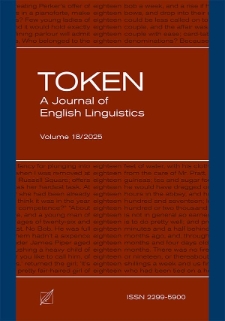
Title: Fanning fires : A corpus assisted analysis ofwomen’s letters during the 1857-58 Indian uprisings
Creator:
Group publication title:
Contributor:
Newman, John G. Ed. ; Dossena, Marina. Ed. ; Samson, Christina. Guest Ed. ; Cecconi, Elisabetta. Guest Ed. ; Martini, Isabella. Guest. Ed.
Abstract:
A paucity of studies has focused on propaganda in the mid-1800s, as the term was mostly linked to education and public opinion formation in a positive sense whilst its pejorative meaning was acquired from WWI onwards. However, during the 1857-58 uprisings in India, the press published a number of letters written home from the colony which fanned fires against the Indians within the Victorian public. This study analyses a small corpus of private letters written by women during the Indian uprisings and published in the British press (WOPLEPIU). At the time, women were stereotyped as domestic creatures, helpless victims of Indian aggression, incapable of developing personal views whereas their letters include personal evaluations and may be considered as a form of propaganda. The methodology adopted is a mixed one. It starts with a corpus-driven approach followed by a corpus assisted discourse analysis of chosen key words and their clusters to analyse quantitatively and qualitatively their recurring phraseology. The findings indicate that women’s letters provide not only factual details but also personal perspectives, thus challenging the stereotyped role of Victorian women while their letters were used for propagandistic reasons.
Table of contents:
5 Dedicatoria
9 Tabula gratulatoria
11 Elisabetta Cecconi, Christina Samson and Isabella Martini, Introduction
45 Letizia Vezzosi, The propagandistic narrative in Saint Erkenwald
69 Elisabetta Cecconi, Propaganda in 17th-century pamphlets on Jamaica: A corpus-assisted discourse study (1655-1700)
95 Elisabetta Lonati, Language ideology and national propaganda in 18th-century British dictionaries of arts and sciences
125 Massimo Sturiale, Elocution, editorials, and Englishness: The role of print media in shaping accent attitudes in the long nineteenth century
147 Christina Samson, Fanning fires. A corpus assisted analysis of women’s letters during the 1857-58 Indian uprisings
171 Matylda Włodarczyk, The bluestocking in the Polish press (1830s-1890s): Othering women through code-switching, borrowing and loan translations
201 Gabriella Del Lungo and Sabrina Cappelli, Propaganda discourse in an imperial setting: The case of Lytton Strachey’s Queen Victoria
233 DavideMazzi, “The mask is off at last!”: Propaganda discourse in the Irish Civil War
253 BirteBös, Propaganda in TIME Magazine – A diachronic corpus-assisted discourse study
281 Roberta Facchinetti, Striking a balance between norms of impartiality and adversarialness in broadcast interviews
299 Marina Bondi, Jessica Jane Nocella, Roberto Paganelli, Vaccines discourse: A diachronic case study
325 Isabel Ermida, Ageist propaganda on social media: Disguising hate speech through mock politeness
Place of publishing:
Physical description:
ISSN:
Publisher:
Wydawnictwo Uniwersytetu Jana Kochanowskiego w Kielcach
Date issued:
Identifier:
oai:bibliotekacyfrowa.ujk.edu.pl:13988 ; doi:10.25951/14396
Language:
Is part of:
Token : A Journal of English Linguistics
Has part:
Type:
Access rights:
Format:
Object collections:
- JKU Digital Library > University Publishing
- JKU Digital Library > University Publishing > Serial publications
- JKU Digital Library > University Publishing > Serial publications > "Token : A Journal of English Linguistics"
Last modified:
Apr 20, 2026
In our library since:
Apr 20, 2026
Number of object content hits:
54
All available object's versions:
https://bibliotekacyfrowa.ujk.edu.pl/publication/14396
Show description in RDF format:
Show description in OAI-PMH format:
| Edition name | Date |
|---|---|
| Samson, Christina, Fanning fires. A corpus assisted analysis ofwomen’s letters during the 1857-58 Indian uprisings | Apr 20, 2026 |
